
Family-owned and operated since 2010, Lift Right Concrete has lifted hundreds of concrete slabs across West Jordan: driveways, sidewalks, entryways, patios, and garage floors. We work in all three West Jordan ZIP codes (84084, 84088, 84081), from the historic Welby area near Jordan Landing to neighborhoods on the east side and the newer subdivisions in the southwest.
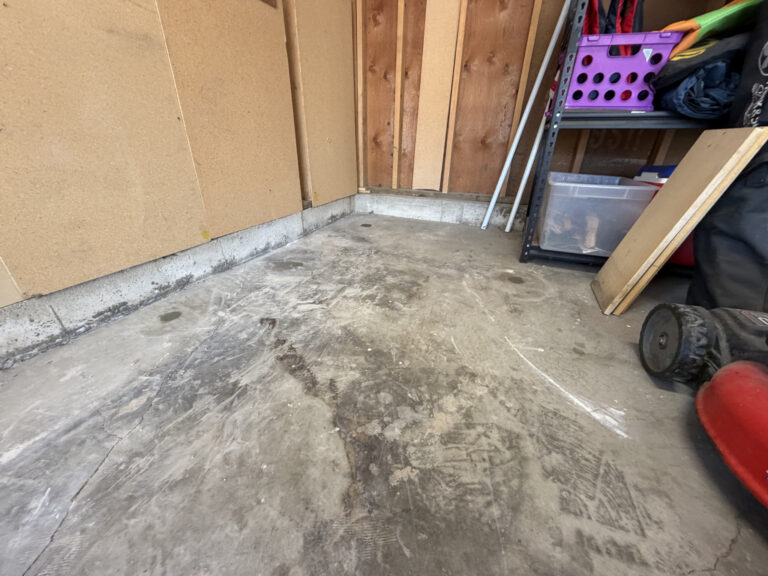
West Jordan garage floor. Drag the handle to compare.
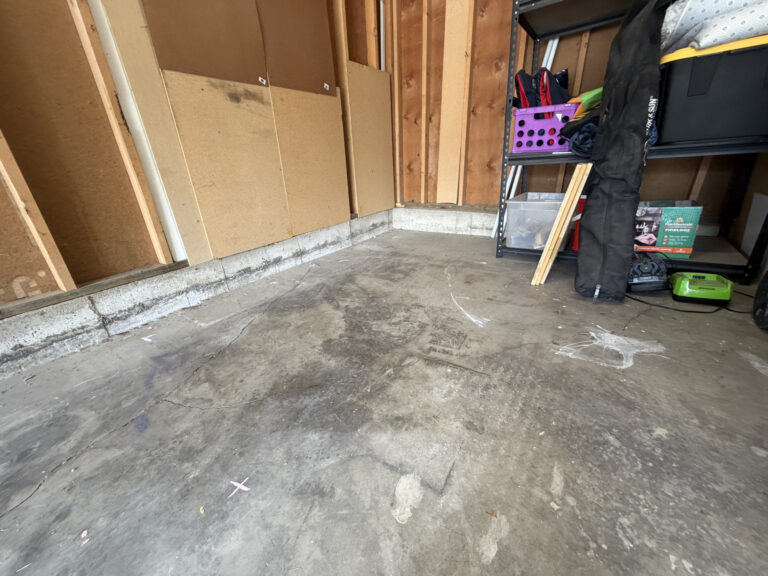
 Before
After
Before
After
Most settled concrete in West Jordan comes down to one cause: poor soil compaction during construction. Soil underneath a slab needs to be compacted in lifts: layered and pressed down a few inches at a time. The problem is most builders only compact the top layer, leaving the deeper soil loose. As that loose soil settles over the years, the slab follows.
Add West Jordan's clay-heavy subsoil to the equation, and you get frost heave during winter. Many West Jordan slabs were poured directly over clay without a proper compacted base. When that clay absorbs moisture and freezes, it expands and lifts the slab. When it thaws, the slab drops, often into a different position than where it started.
The visible result: cracks, trip hazards, driveways that sit lower than the garage floor, and patios pitched the wrong way.
Watch for these around your home:
If you've got any of these, the slab has settled. Most are a one-day fix.
Across hundreds of West Jordan projects, these are the slabs we lift most often:
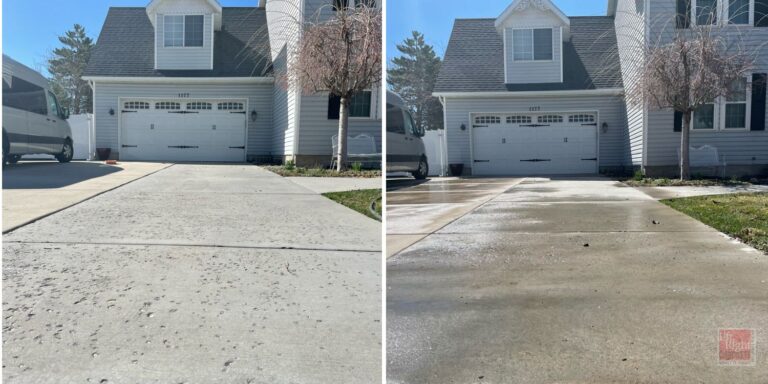
The most common job. Driveways settle at the garage joint, creating a step and a snow-shoveling nightmare.
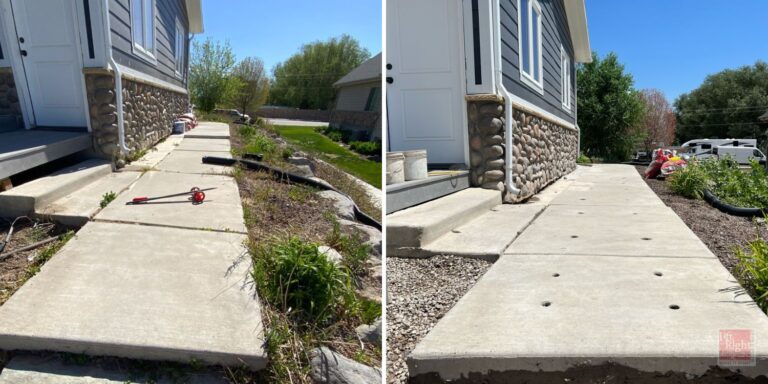
Public sidewalk panels and front walkways with lifted or dropped joints.
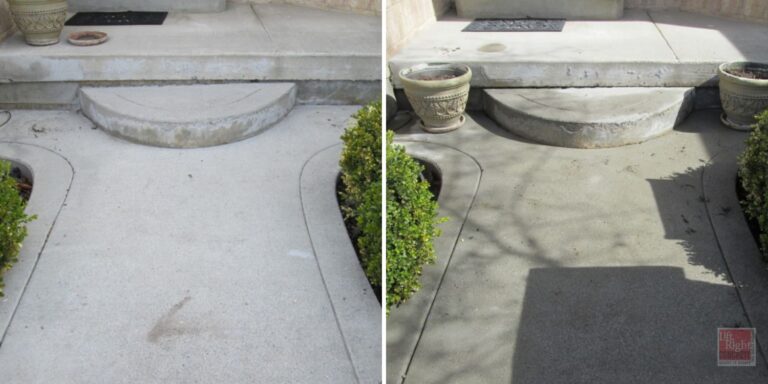
Front steps and landings where settlement creates a hazard right at the door.
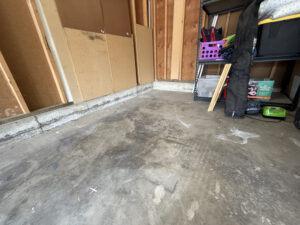 Before
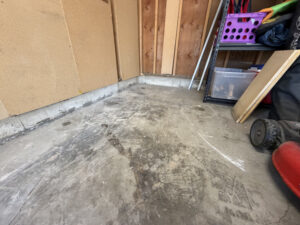 After
AfterInterior slab repair when a corner has dropped or cracks have widened. West Jordan project shown.
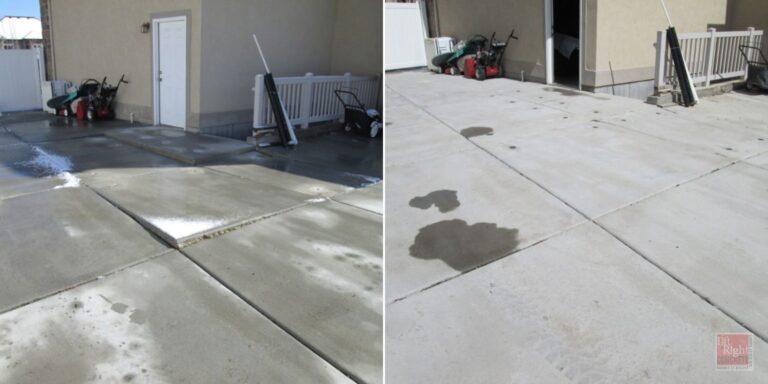
Back patios leveled when they're pitching toward the house or pooling water.
We've completed projects in all three West Jordan ZIP codes:
Beyond individual homeowners, we've done extensive concrete work for HOAs across these neighborhoods: shared sidewalks, common-area patios, clubhouse entries, and association-owned slabs. If you live in West Jordan, you're in our service area. Period.
The same proven techniques our family has refined over 15+ years of local work are now used by West Jordan City's own crews. When the city itself calls on us, you can call on us too.
We offer both. See the full comparison.
For most West Jordan jobs we now recommend polyurethane foam. The injection holes are smaller, the foam cures in about 15 minutes (so you can drive on the slab the same day), and it weighs roughly 1/20th of mudjacking slurry. That weight difference matters here. West Jordan's clay subsoil is part of why slabs settle in the first place, and polyfoam doesn't add hundreds of pounds back on top of soil that's already struggling.
We still use mudjacking when it's the right call: larger slabs, deep voids, or jobs where budget is the deciding factor. The cement-based slurry has been proven in Utah for decades and lifts concrete reliably at a lower price point than foam.
When we come out we'll tell you which method we'd use on your specific slab and why. If you want a quote for both, just ask.
Pricing depends on the size of the slab and how much it needs to come up. Most West Jordan residential jobs are quoted as a single flat price after we look at the slab in person. We give you a firm written estimate before any work begins, so there are no surprises. Call (435) 850-6363 for a free estimate at your home.
Most West Jordan driveways are completed in a single day. Walkways and patios are usually faster. You can drive on the slab within 24 hours.
It depends on the soil. Disturbed soils typically take 5 to 10 years to finish settling. We can seal new cracks if they show up so they don't get worse, and for slabs on unstable soil, we can test the conditions and stabilize the base underneath. That's the most reliable way to keep a slab from dropping again. Our lifting work comes with a warranty either way.
No. All work is done outside. Just keep a clear path to the slab.
No. Both newer and older West Jordan homes settle for the same reasons: improper soil compaction during construction, freeze-thaw cycles working on clay subsoil, or both. We see settlement across newer subdivisions and decades-old homes alike. The fix is the same.
We'll come out to your West Jordan property, look at the slab, and give you a firm written estimate before any work happens. No pressure, no upsells, no obligation.
Request a Quote